
18 juli 2026 - 19 juli 2026
Deur open: 18:00 uur
Cortejo Azahara, Lanjaron, Alpujarras, Granada,
Entree: Vanaf € 5
Meer speeldata:
Muziekvoorstelling Kinderen van Al-AndalusMuziek uit het verloren paradijs in Marokko
Veel Marokkanen van Andalusische afkomst zien Al-Andalus als het verloren paradijs. Zowel joden als moslims werden vanaf 1492 verdreven uit Al-Andalus, de Arabische naam voor het Iberisch Schiereiland, verdreven. Zij vonden onder andere een veilig onderkomen in Marokko. Daar hielden zij hun Andalusische cultuur en tradities in leven. Sommige families bewaren nog steeds de eeuwenoude sleutels van hun huizen in Granada. Kom luisteren naar een wonderschone, verbindende muzikale ontmoeting tussen vroeger en nu, tussen joods en islamitisch, tussen klassiek en modern.
De Kinderen van Al-Andalus…
… Dat zijn de Marokkaanse nakomelingen van de Andalusische moslims en joden. Op de vlucht voor de Spaanse Inquisitie verlieten zij vanaf 1492 het Iberische Schiereiland. Veel van deze vluchtelingen bouwden een nieuw leven op in Marokko. In Marokko voelden de Andalusische joden en moslims zich eeuwenlang bij elkaar thuis. Ze deelden herinneringen aan hun vaderland en hun verleden. Ze behielden hun rijke Andalusische tradities, cultuur en identiteit. Muziek speelde een belangrijke rol in hun leven. De muziek weerspiegelt nog steeds hun diepe verbondenheid.
Smeltkroes van muzikale culturen
Al-Andalus was eeuwenlang een smeltkroes van muzikale culturen. Het begon met Ziryâb. Deze ud-speler uit Bagdad bracht in 822 de eerste Arabische klanken naar het hof van Córdoba. In het jaar 1000 was Córdoba uitgegroeid tot de grootste stad ter wereld. Córdoba was een cultureel, artistiek en intellectueel middelpunt. In de 12e eeuw kwam Ibn Bajja. Hij combineerde het Arabische muzikale erfgoed van Ziryâb met de lokale Romaanse muziekstijlen. Uiteindelijk ontstonden hieruit allerlei muziekstijlen, van de klassieke Andalusisch-Marokkaanse liederen (noubat) tot de flamenco.
De verhaal van de vlucht in muziek
De muziekvoorstelling bestaat uit een aantal composities. Elke compositie vertelt een deel van het verhaal van de Andalusische vluchtelingen. Van de inname van het Iberisch Schiereiland door de Arabieren en Imazighen in 711 en de bloeitijd van Córdoba tot aan de overgave van Granada in 1492 en de vlucht naar Marokko. In Kinderen van Al-Andalus krijgen alle vormen van Andalusische muziek een plaats. Van middeleeuwse Andalusische nouba’s tot moderne Marokkaanse composities. Van taqsim tot de verschillende soorten flamenco. Vaak gaan de muziekstijlen spannende crossovers aan, bijvoorbeeld doordat twee muziekstijlen of twee muziekinstrumenten uit verschillende genres een dialoog aangaan met elkaar.
Inclusief boekpresentatie door Rick Leeuwestein.
Musici
De werken worden uitgevoerd door leden van het Marmoucha Orchestra:
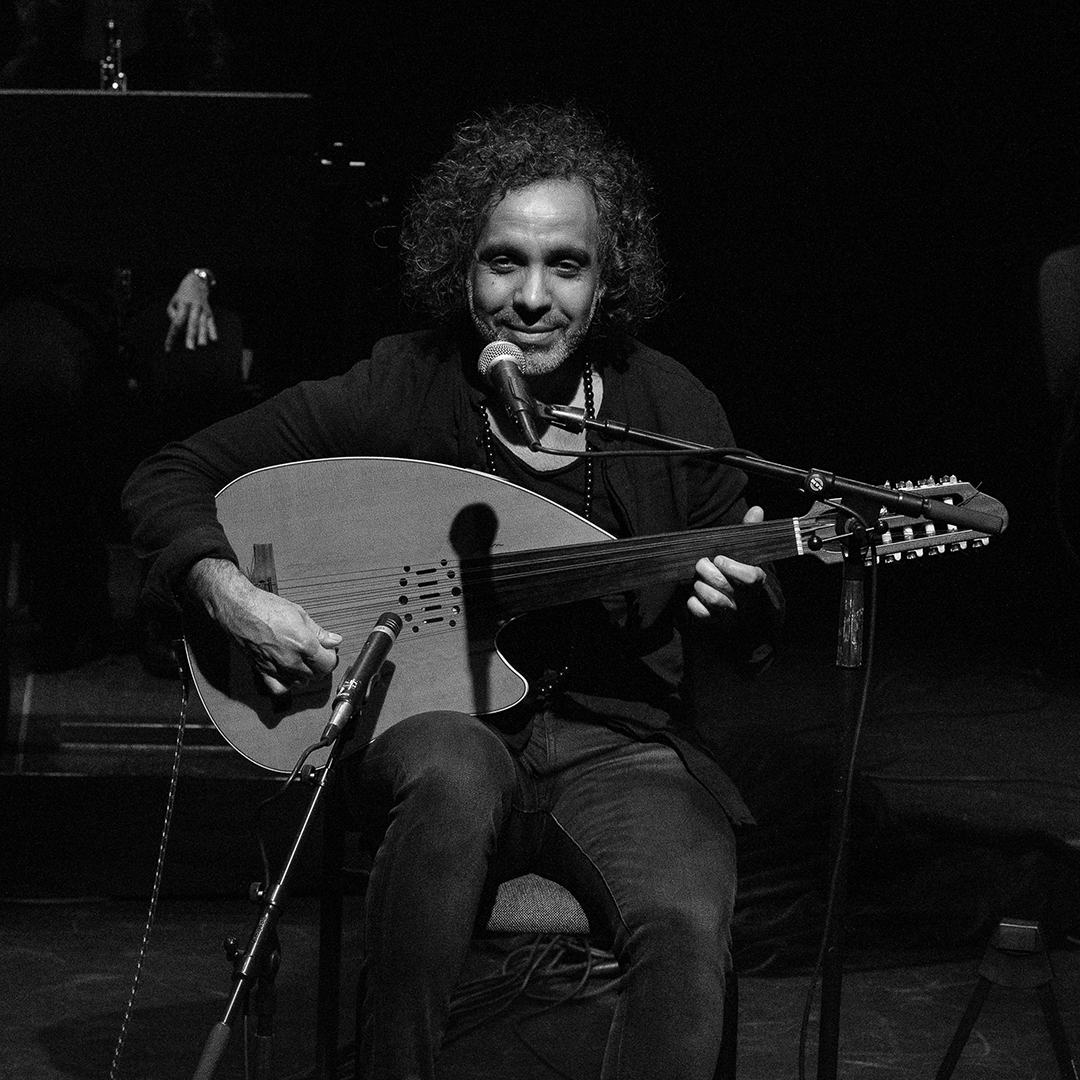
- Mohamed Ahaddaf – Oud
- Emad Ghajjou – Darbuka
Het Boek: Children of Al-Andalus
Het boek Children of Al-Andalus is gemaakt door Rick Leeuwestein en Hicham Ghalbane.
Bestel het boek via: https://www.childrenofandalus.com/shop
Programma
De voorstelling wordt gevolgd door een diner om 20:30 en een live screening van de film ‘Children of Al-Andalus’ om 21:30.
De muziekvoorstelling Kinderen van Al-Andalus is (mede) mogelijk gemaakt door het AFK (Amsterdams Fonds voor de Kunst) en door FPK (Fonds Podiumkunsten).
Children of Al-Andalus
Music from the Lost Paradise in Morocco
Many Moroccans of Andalusian descent regard Al-Andalus as a lost paradise. From 1492 onwards, both Jews and Muslims were expelled from Al-Andalus—the Arabic name for the Iberian Peninsula—and many found refuge in Morocco. There they preserved their Andalusian culture and traditions. Some families still keep the centuries-old keys to their homes in Granada. Experience a beautiful musical encounter that connects past and present, Jewish and Muslim traditions, and classical and contemporary music.
The Children of Al-Andalus…
…are the Moroccan descendants of the Andalusian Muslims and Jews who fled the Iberian Peninsula after 1492 to escape the Spanish Inquisition. Many settled in Morocco, where Jewish and Muslim Andalusians lived side by side for centuries. They shared memories of their homeland while preserving their rich traditions, culture, and identity. Music played a central role in their lives and continues to reflect their deep cultural bond.
A Melting Pot of Musical Traditions
For centuries, Al-Andalus was a vibrant meeting place of musical cultures. Its story begins with Ziryab, the celebrated oud player from Baghdad who introduced Arab musical traditions to the court of Córdoba in 822. By the year 1000, Córdoba had become one of the world’s largest and most influential cities, renowned for its cultural, artistic, and intellectual achievements.
In the twelfth century, Ibn Bajja blended Ziryab’s Arab musical heritage with local Romance musical traditions. From this fusion emerged a rich variety of musical styles, ranging from the classical Andalusian-Moroccan noubat tradition to flamenco.
The Story of Exile Told Through Music
The performance consists of a series of compositions, each telling a chapter in the story of the Andalusian refugees. It traces the arrival of Arab and Berber forces on the Iberian Peninsula in 711, the flourishing of Córdoba, the fall of Granada in 1492, and the subsequent journey to Morocco.
Children of Al-Andalus embraces the full spectrum of Andalusian musical traditions, from medieval nouba compositions to contemporary Moroccan works, from taqsim improvisations to various forms of flamenco. Different musical traditions frequently meet in exciting crossovers, creating dialogues between genres and instruments from diverse cultural backgrounds.
The performance also includes a presentation of the book Children of Al-Andalus by Rick Leeuwestein.
Musicians
The works are performed by members of the Marmoucha Orchestra:
- Mohamed Ahaddaf – Oud
- Emad Ghajjou – Darbuka
Book: Children of Al-Andalus
The book Children of Al-Andalus was created by Rick Leeuwestein and Hicham Ghalbane.
Order the book at: https://www.childrenofandalus.com/shop
Programme
The performance is followed by dinner at 20:30, and a live screening of the documentary film Children of Al-Andalus at 21:30.
Children of Al-Andalus (the musical performance) is supported by the AFK (Amsterdam Fund for the Arts) and by FPK (Fonds Podiumkunsten).
#260718CHI